Cathedrals of the Bronze Age
Stone Circles
Stone circles represent the peak of megalithic architecture and technology.
There are five stone circles in West Penwith, out of a definite seven and a possible ten originals. In Cornish they're called dans mên - a dance of stones. They were built around 2500-2200 BCE. All five stone circles had nineteen stones (though two are uncertain), architecturally embodying the Sun-Moon Metonic cycle.
Stone circles cannot be isolated from their complexes - arrays of menhirs, cairns and landscape features that surround them like solar systems, constituting one large ancient site one-to-two miles wide.
Stone circles were carefully located and designed so that various proportional, mathematical, topographical and astronomical factors were built into their design and positioning. They are more sophisticated and complex than they look.

Tregeseal stone circle near St Just, with Carn Vres behind - part of the circle's setting. The carn has a spring and it overlooks the stone circle.

Tregeseal stone circle with neolithic tor Carn Kenidjack behind

Tregeseal stone circle. The stones are flatter on the inside, rounder on the outside, concentrating energy into the circle
Tregeseal was originally a double circle - the other was destroyed in the 20th C. There are cairns, holed stones, a menhir and Carn Kenidjack in its wider complex. It lies in a bowl of hills, looking over the sea toward Scilly and cradled by Carn Kenidjack.
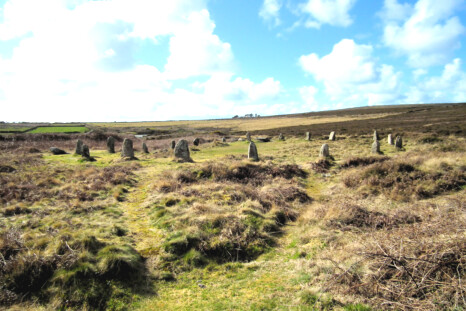
Tregeseal stone circle

Crystalline granite, 20% quartz and mica, with metals - excellent for memory storage and a good conductor of subtle energy

Each stone at Tregeseal - and every stone circle - is quite different, and all stones have been carefully chosen. There's a certain artistry to each stone.
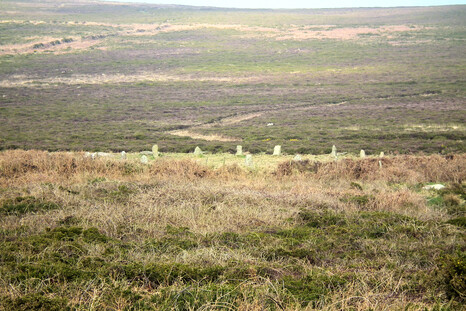
Tregeseal stone circle

Carn Kenidjack as seen from Tregeseal stone circle
Mên an Tol sits in a bowl of hills with high horizons. Its current shape is not as it originally was. It possibly had nineteen stones. The holed stone is unique. It is part of a complex including the Nine Maidens and Carn Galva.
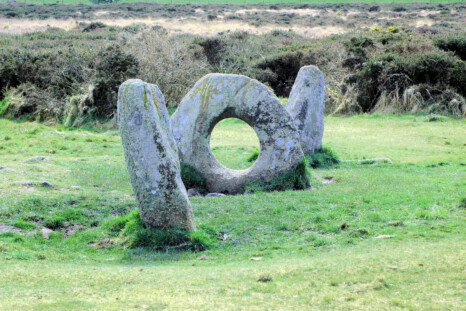
The Mên an Tol. This configuration of three stones is incorrect. It was created by a zealous Victorian antiquarian who thought he knew how it should be arranged (the same one who restored Lanyon Quoit). We don't really know for certain the exact number and position of all stones in the circle, but a few are still in place, a couple are buried and others can be deduced
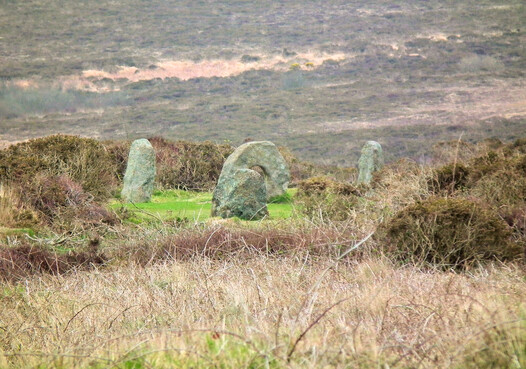
The Mên an Tol is a former stone circle, and here you can see roughly what it looked like. It probably had nineteen stones. The question is whether the iconic holed stone was inside the circle or part of its ring

The Mên an Tol, with some of the stone circle stones in the foreground
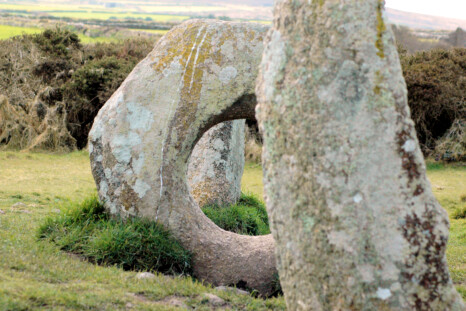
The Mên an Tol
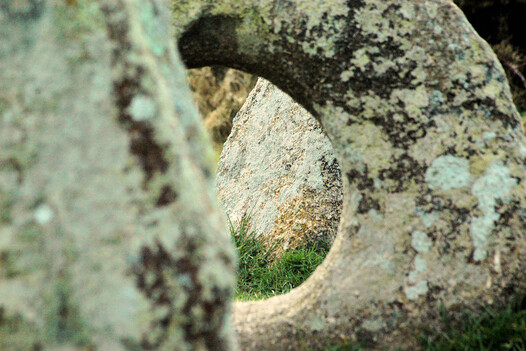
The Mên an Tol. One theory had it that the holed stone was a rock with a solution basin in it (these are explained in Shining Land), forming the hole, and then it was dressed to make it as it is today
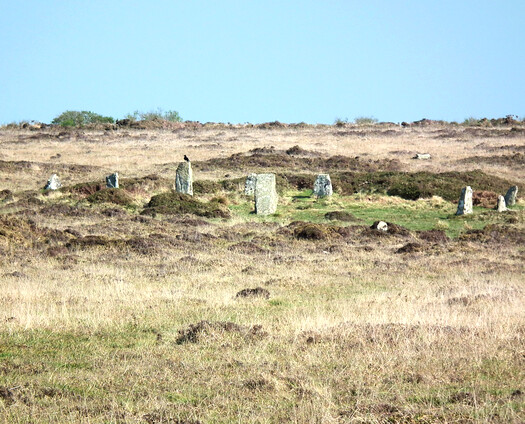
The Nine Maidens or Boskednan stone circle, on high moorland beneath the neolithic tor Carn Galva
The Nine Maidens are damaged. Now it is in moorland when, 4,300 years ago, it was in green parkland with a wonderful view. Two big and several smaller cairns surround it, with Carn Galva as a backdrop and Mên an Tol as its twin circle. The complex embraces Zennor Hill, Bosigran Castle and Carfury menhir.

The bronze age Nine Maidens with neolithic tor Carn Galva behind
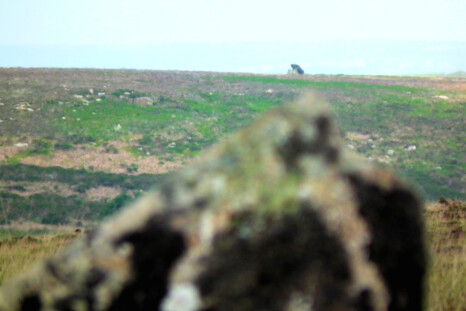
Mulfra Quoit as seen from the Nine Maidens - a one-mile distance

Carn Galva as seen from the Nine Maidens. A processional route went from here up the tor
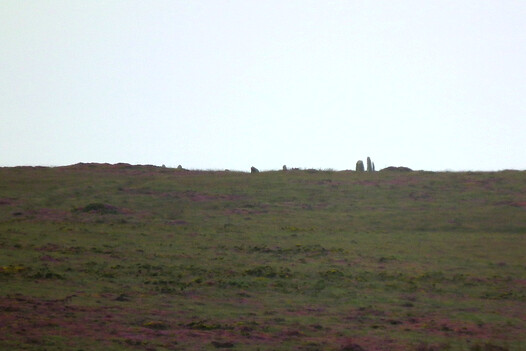
The Nine Maidens as seen from Mulfra Quoit, one mile distant (telephoto shot). Deliberate intervisibility. The newer bronze age site, in doing this, is drawing on the neolithic heritage and tradition. The megalith builders, while innovating and expressing the ideas of their time, nevertheless drew on geomantic and esoteric principles that were consistent with those established in the neolithic 3000s. Mark Two megalithism and a new era in a much more cleared, humanised and (for the time) quite densely populated landscape
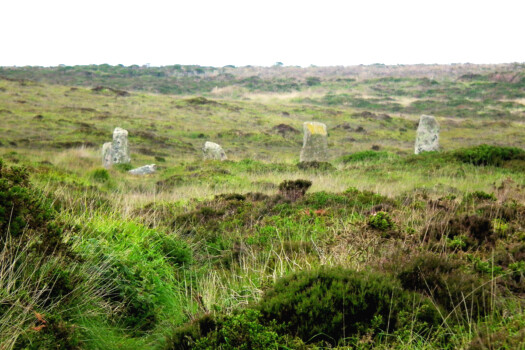
The Nine Maidens
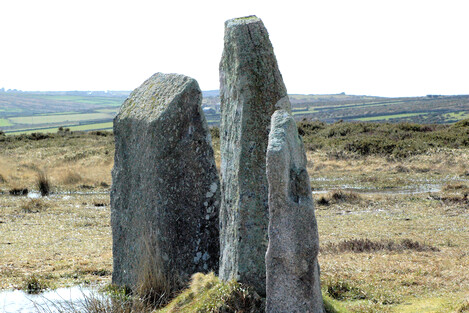
Three stones in the Nine Maidens stone circle
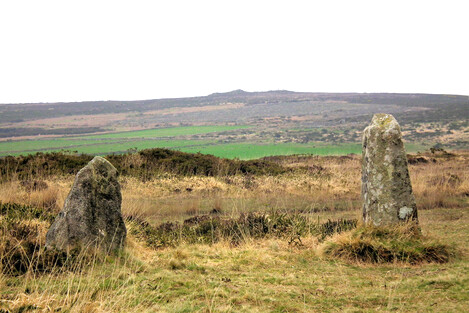
Watch Croft with its summit cairns, as seen from the Nine Maidens. These distant scenic backdrops and the far horizon are as important to stone circles' psychogeographic setting as more nearby menhirs and cairns are
Boscawen-ûn sits at a geomantic bull's-eye, lighting up the Penwith system by dint of its alignments and astronomicals. It's a unique oval circle with a leaning, off-centre stone - its top is exactly over the power centre. Nearby is Neolithic Creeg Tol. Boscawen-ûn is surrounded with menhirs and now-gone cairns as part of its complex.
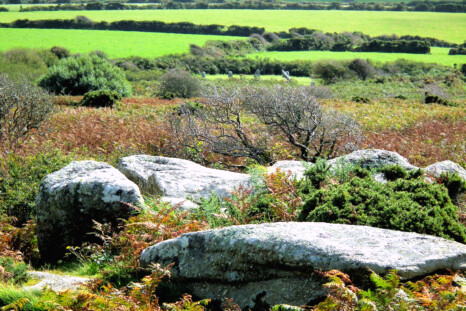
Boscawen-ûn and Creeg Tol
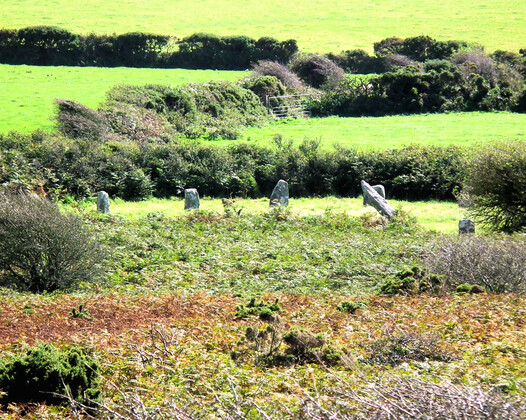
Boscawen-ûn, photographed from Creeg Tol. It's always worth visiting Creeg Tol to see whether others are at Boscawen-ûn, and to ready yourself for entering the circle mindfully

The central leaning stone at Boscawen-ûn has carvings on it (hardly detectable) and it points toward the local rising point of the sun at summer solstice, up the southwest peninsula of Britain

The quartz stone at Boscawen-ûn - very special

Each stone has character - go round the circle and make friends with them

Boscawen-ûn is rarely crowded, but it does attract groups of people who really love the place and get up to interesting things there


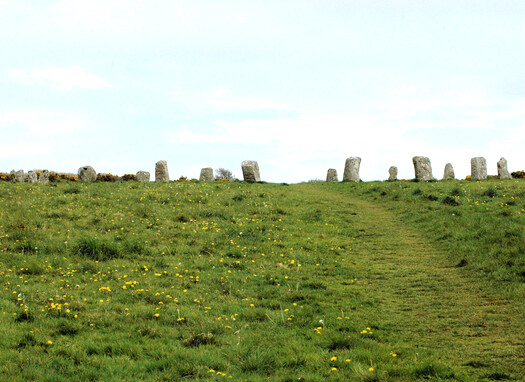
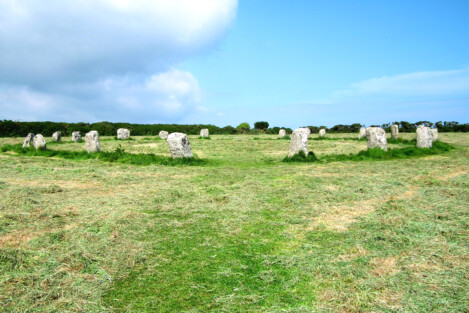
The Merry Maidens - intact and humming. Being accessible from the road it attracts more visitors and random walkers, but it's a pleasant place, and energetic at the liminal moments of the day
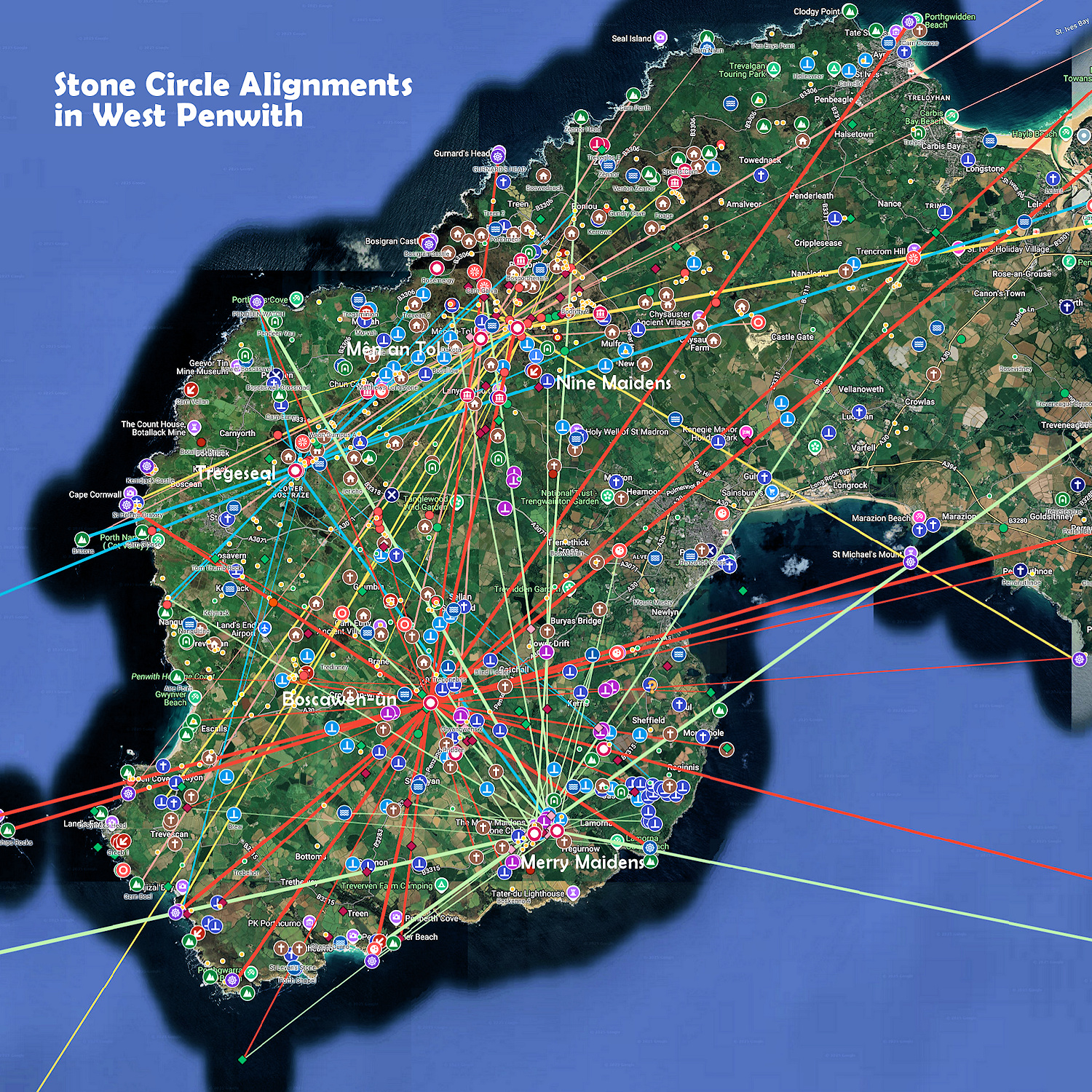
The Merry Maidens is circular with 19 stones. Originally it had a twin circle at Tregurnow, now gone. It has a wide view of hills northwards. Lying on an alignment between Carn Brea, St Michael's Mount and Treryn Dinas, it has a complex of menhirs, holed stones, cairns and crosses.
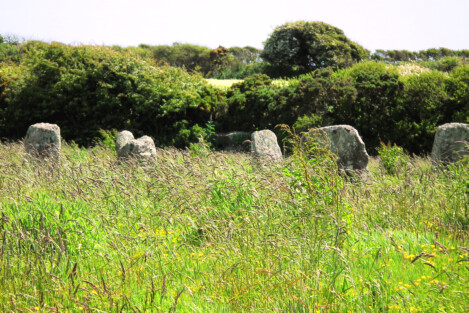

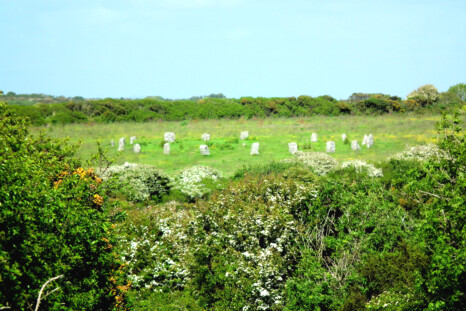
The Merry Maidens as seen from Gûn Rith menhir a few hundred yards away. If Tregurnow stone circle were alive today, it would be on the horizon, aligned with the centre of the Merry Maidens

Misty Boscawen-ûn morning
In Memoriam
Remembering ancient sites and stones that have been destroyed.
Over time, landowners, looters, miners, developers, religious extremists, antiquarians and others have dismembered and removed many ancient sites in West Penwith. These are not just lumps of stone and earth: they are leftovers of an advanced technology that is important for our future. We destroy them at our peril.
The stone below is a remnant of the former Tregeseal West stone circle, destroyed in the 20th Century. It was in the way of tractors.

One of the stones from the now-destroyed Tregeseal West stone circle, built into the hedge (wall) alongside the path leading to the surviving stone circle, Tregeseal East