A Variety of Holy Bumps
Cairns and Barrows
Cairns and barrows are the most common kind of ancient site in West Penwith and across Britain.
Apart from longbarrows from the Neolithic 3000s, cairns and barrows were built in the Bronze Age from 2500 BCE onwards, peaking around 2200-1800 and tailing off around 1500-1100 as the Bronze Age came to a close.
Perhaps a few were built earlier in the 2000s, but there is no known physical evidence. Mounds have not been properly and comprehensively researched and dated.
Most barrows and cairns are solid, built of earth (barrows) or earth and stones (cairns), sometimes with earthfast rocks built into them, or they might be built into natural features.
Some are chambered cairns, which are different in purpose, working as energy-baths.
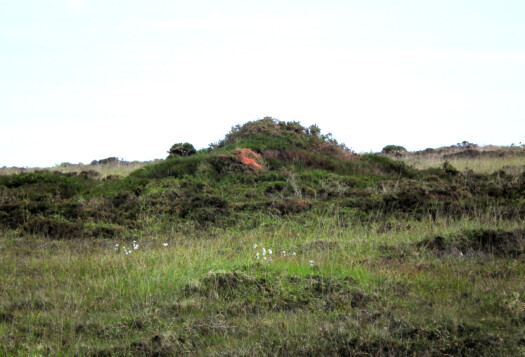
A typical Penwith cairn - overgrown and befurzed but still there. This one is near the Nine Maidens stone circle, part of its complex. The orange creeper is a longtime indigenous parasite that seems to coexist happily with surrounding plants
Mounds were built for a variety of purposes:
+ as prominent landmarks,
+ to mark places and territory,
+ to add features to the landscape,
+ for geomantic purposes (energy-vortices and alignments),
+ as shrines, for burial or as repositories (cists, urns or deposits),
+ as platforms for observing landscapes or astronomicals,
+ and even perhaps as stages for spectacles (platform barrows),
- and frequently they were multi-purpose.

Cairns on Chapel Carn Brea, as seen from Bartinney direction

One of the platform cairns at Botrea Barrows
Many cairns have been damaged by antiquarians, treasure hunters, landowners or erosion. But many survive, dotted around, some in groups, with a few barrowfields (eg. Beacon Barrows). Some barrows and cairns sit on energy-vortices, and many are placed on alignments or alignment intersections.
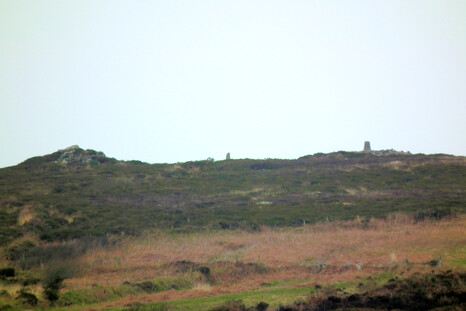
A cairn (on the right, with a modern trig point on it) on Watch Croft, as seen from downhill at Mên Scryfa. Middle, a menhir, placed to be seen from Mên Scryfa. Left, a natural crag, but energetic.

Leftovers of a kerbed cist cairn at Chy Praze, on the cliffs above Portheras Cove. Again, if someone was buried here, they would have been regarded as a special person. The Isles of Scilly can be seen from here - move away and they disappear from sight

A damaged chambered cairn, Carn Mȇn Ellas, at Mayon Cliff near Sennen. The chamber was likely used for initiatory and retreat purposes, or perhaps a revered person was buried there to bless the land. You'd have to be considered a very special person to be buried in this remarkable place, and in being buried here that soul would be rendering a special service, blessing the place and the world (since Mayon Cliff has a wide-open panorama). It's likely anyone buried here would be a great druid or priestess - judging by the location

Cairn on top of Sancreed Beacon. If you're looking for a burial place for a great chief, this is a likely one.
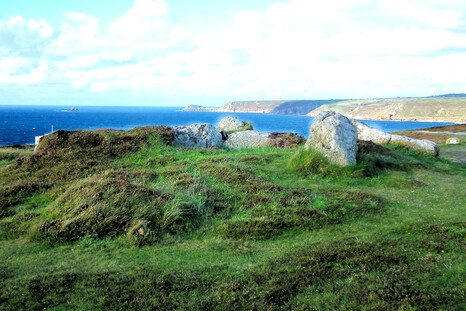
Carn Mȇn Ellas - it has a remarkable placing and is on a major alignment from Godolphin Hill to the Isles of Scilly. Behind in the distance is Kilgooth Ust or Cape Cornwall
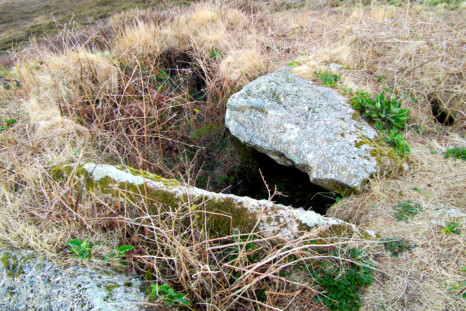
Looking inside the cist in the cairn on the right at Botallack Common
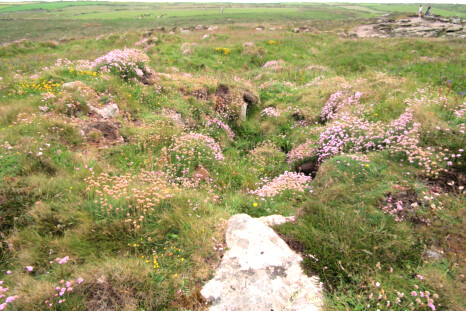
Ruined cist cairn at Pordenack Point. Some cists contained relics or magical or geomantic items - not always bodies
Chambered cairns are different. Not for burial, they served as repositories for treating items and seeds, as retreats (for initiations, oracular purposes, dying) and for land-improvement. The atmosphere in the chamber can be intensely tranquil and yet charged up. They were used both shamanically and practically.
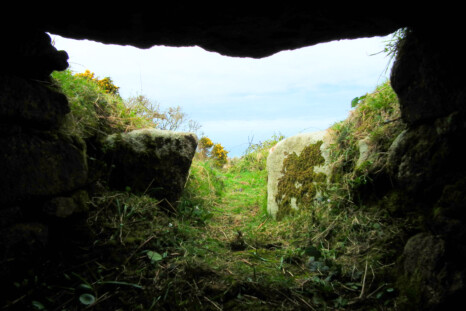
Looking out from a chambered cairn at Treen, just above Morvah. It's probable that the opening was blocked off, opened only at certain times. The objects, relics or deposits, or any person doing a retreat or a rite in the chamber would be in utter stillness and darkness, experiencing sensory deprivation and, if they were trained or in training, a consequent spiritual uplift. Below right is a picture of the same cairn from the outside

Cairn at Botallack Common, close to Tregeseal stone circle and part of its complex. It has a cist or chamber in it - see left. This cairn might be an early cairn from the late neolithic
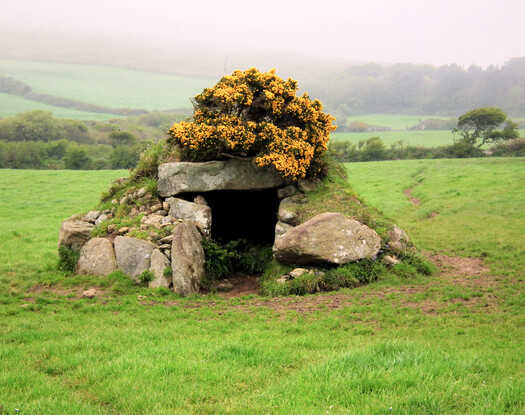
Chambered cairn at Brane near Carn Euny, with bronze age punk hair-do

Treen chambered cairn from the outside. You can crawl inside. it's very still and quiet in there
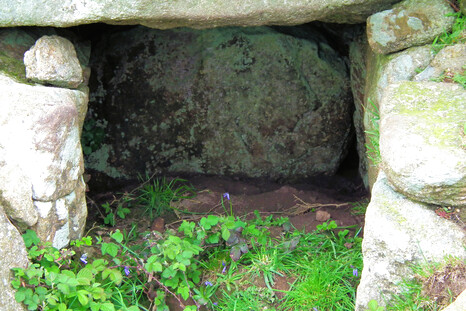
Inside the chambered cairn at Brane, near Carn Euny

The chambered cairn on the summit of Chapel Carn Brea. This is what I'd call a geomantic cairn - definitely put there for earth energy reasons, for the benefit of the whole landscape. Whether there were items stored there or whether people went there for training, retreat or to die, the primary purpose would still have been geomantic. Mayon Cliff cairn above is another classic geomantic cairn

The summit chambered cairn on Chapel Carn Brea
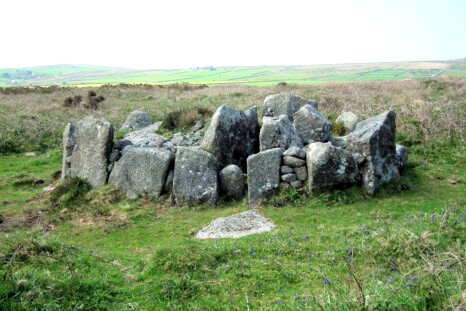
Bosiliack Barrow, an excavated and reconstructed chambered cairn. Quite a friendly cairn, just between Ding Dong mine and Lanyon Quoit. This cairn is aligned with the Nine Maidens, Lanyon Quoit, Boscawen-ûn and Treryn Dinas. It also lies exactly aligned between Mulfra Quoit and West Lanyon Quoit

The neolithic longbarrow on Chapel Carn Brea. This goes back to the mid-3000s BCE, older than most barrows by 1,000 or more years
Ballowall Barrow is unique, a Late Neolithic and Bronze Age cairn in a class of its own. Its several chambers and cists were added to in stages. In an inspiring location overlooking the ocean, the Scillies are visible 25 miles (40km) over the sea.
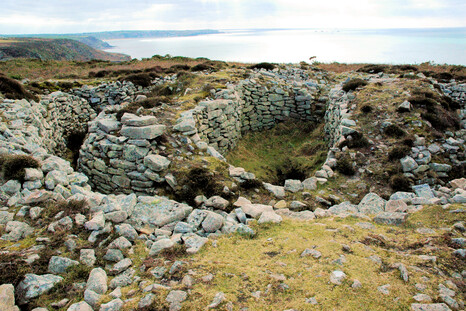
Inside the chambered cairn at Ballowall Barrow

Ballowall Barrow at Carn Gloose near St Just, a totally unique multi-period chambered cairn overlooking the ocean, and it would have been very visible from the ocean and from Mayon Cliff, southwards near Sennen

One of the Boscregan cairns. This clifftop cairn, visible from out to sea, had a cist inside it. Chapel Carn Brea is behind
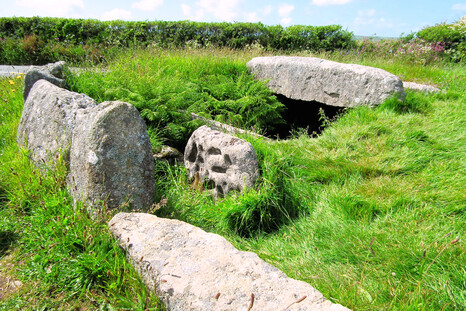
Tregiffian cairn, a chambered cairn near the Merry Maidens - part covered by a road, once an ancient track passing the barrow
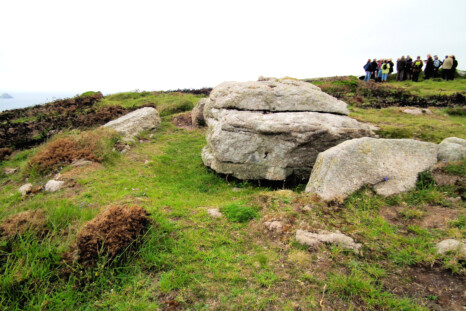
One of the Boscregan cairns, just down the coast from Ballowall. This is a propped stone inside a cairn setting - thoroughly unique and rather difficult to figure out. The Scillies are prominent from here. The group of dowsers and archaeologists behind are standing at the cist cairn above

Tregeseal chambered cairn, a little way west of Tregeseal stone circle

Cairn with cist at Pordenack Point. Altogether there are three cairns and one circular enclosure here - plus a dramatic clifftop headland with many simulacra nearby. Pordenack Point is a more significant site than often is reckoned
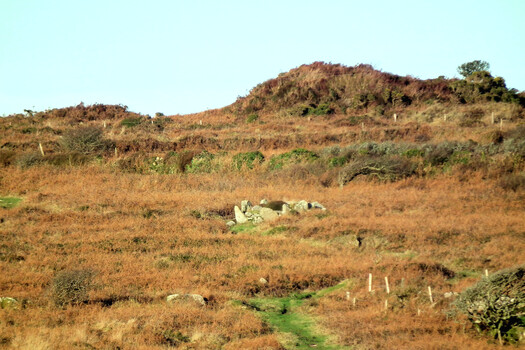
Bosiliack Barrow as seen from Lanyon Quoit about half a mile away (telephoto shot)


Chapel Carn Brea, the last hill in Britain - it has a lot of cairns on and around it
To find these sites on a detailed online map: Map of the Ancient Sites of West Penwith